You had filler under your eyes to look more rested. Now, months or even years later, the area looks puffier than it did before. Maybe there's a bulge that wasn't there, a bluish tint, or swelling that's worse in the morning. You're not imagining it. Migration isn't common, but it does happen, and under-eye filler often lingers longer than patients are told.
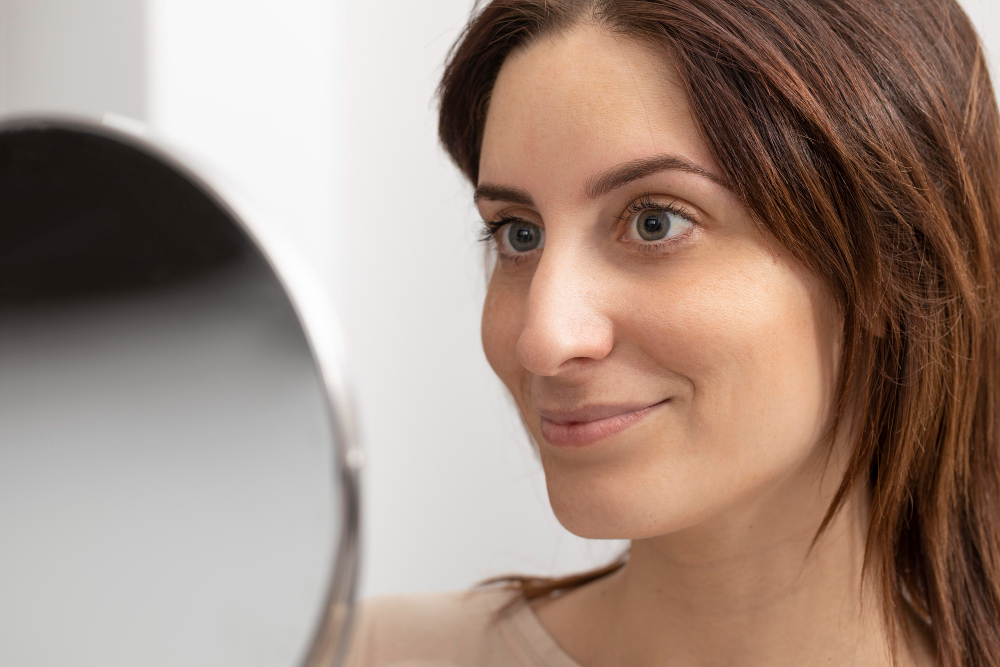
Filler migration means the product has moved away from where it was placed. Under the eyes, that usually means hyaluronic acid filler injected into the tear trough (the groove between the lower eyelid and cheek) has spread upward into the eyelid or outward toward the cheek.
The lower eyelid is a uniquely tough place for filler to stay put. It moves every time you blink, smile, or squint, the skin is thin, and the tissue layers are delicate. The American Academy of Ophthalmology's EyeWiki review of filler complications notes that problems from migrated filler around the eye "may occur long after the initial procedure."
Puffiness over the cheekbone after tear trough filler has a name: malar edema. According to the same AAO review, it can happen in up to 11% of tear trough filler cases, and patients sometimes notice it years after treatment as the filler slowly breaks down and holds more water.
Constant motion. Blinking and facial expressions put steady pressure on the filler.
Too much product, or too superficial. Small amounts placed deep are less likely to cause trouble. Overfilling or placing filler too close to the surface raises the risk of visible lumps and a blue tint.
Filler that lasts longer than expected. Patients often hear that filler dissolves in 6 to 12 months. In Dr. David Gay's experience, filler under the eyes often stays far longer than that. When it lingers and shifts, it can keep causing puffiness long after the original effect has faded.
Treating the wrong problem. Many people who get under-eye filler actually have puffy lower eyelid fat, not just a hollow. Filling around a bulge adds volume to an area that was already full.
The first step is an exam with someone who understands eyelid anatomy and can tell the difference between migrated filler, fluid, and lower eyelid fat. Many of these look alike from the outside, and the treatment for each is different.
Hyaluronic acid filler can usually be broken down with an enzyme called hyaluronidase. Dissolving migrated filler often reduces puffiness and gives a clearer picture of what's going on underneath.
Once the filler is out of the way, many patients find the original concern was under-eye bags all along. For bags caused by fat, a lower blepharoplasty (lower eyelid lift) treats the cause directly by removing or repositioning that fat. The American Academy of Ophthalmology notes this can often be done through an incision inside the eyelid that leaves no visible scar. The result is long-lasting and doesn't rely on adding anything foreign.
Dr. David Z. Gay is a board-certified ophthalmologist with fellowship training in oculofacial plastic and reconstructive surgery. Eyelids are his specialty. He rarely recommends filler under the eyes because filler there can migrate and linger, and he regularly helps patients sort out what's filler, what's swelling, and what's lower eyelid fat.
If surgery is the right next step, you can learn more on our blepharoplasty page and see real patient results in our eyelid surgery before and after gallery. For a look at how to vet any surgeon, read How to Choose a Surgeon for Eyelid Surgery.
It's uncommon, but yes. Filler under the eyes can shift gradually, and swelling from tear trough filler sometimes appears years after treatment. If your under-eyes have slowly become puffier since filler, it's worth an evaluation.
Patients are often told it's gone within a year. In Dr. Gay's experience, under-eye filler frequently lasts much longer. Hyaluronic acid filler can usually be dissolved with hyaluronidase if it's causing problems.
They can look very similar. An exam by an eyelid specialist is the most reliable way to tell. Sometimes dissolving the filler first is the only way to see what's underneath.
Many patients who've had filler are good candidates for lower blepharoplasty. Dr. Gay may recommend dissolving remaining filler first and letting the tissue settle before surgery.
If your under-eyes look puffier since filler, you don't have to keep adding more. Schedule online or call 512-607-6884 to see Dr. Gay in Dripping Springs.


13830 Sawyer Ranch Road
Suite 201 Dripping Springs,
TX 78620
Inside Howerton Eye
4282 Farm to Market 1626
Suite 200
Kyle, TX 78640
Inside VIEW Temple
221 Paloma Drive
Temple, TX 76502
Inside New Braunfels Vision Center
1439 Hanz Drive
New Braunfels, TX 78130


