Laser skin treatments use focused light to improve your skin's appearance by targeting specific concerns without invasive surgery. These treatments can help you achieve healthier, more youthful-looking skin by addressing a wide range of issues.
What Laser Treatments Can Do For You:
Modern laser technology has evolved significantly, offering customizable treatments for your specific skin type and concerns with improved safety and reduced recovery time compared to older methods. Lasers generally fall into two categories: ablative lasers, which remove outer skin layers for dramatic results, and non-ablative lasers, which work beneath the surface with minimal downtime. Both stimulate your body's natural collagen production—the protein responsible for skin's structure and elasticity.
With dozens of available laser technologies, board-certified providers can precisely treat everything from melasma to deep wrinkles. Whether you're dealing with sun damage from the Central Texas heat or wish to smooth your skin's texture, laser treatments offer solutions that were once only possible through surgery.
Laser skin treatments work on a principle called selective photothermolysis. This means lasers deliver precise light energy to specific targets in your skin (called chromophores), such as melanin (pigment) or hemoglobin (in blood vessels), without damaging surrounding tissue. The absorbed light converts to heat, creating a controlled injury that triggers your body's natural healing response. This process stimulates collagen remodeling in the dermis, the deeper skin layer responsible for firmness and elasticity.
At Texas Eye Aesthetics, our team uses this science with over 50 state-of-the-art devices to provide the right tool for your unique needs. Laser skin treatments fall into two main categories:
Ablative lasers are powerful treatments that work by vaporizing the outermost layer of your skin (the epidermis) while heating the underlying dermis. This prompts your body to produce significant amounts of new collagen as it heals, leading to dramatic improvements in skin texture and tone.
More info about our CO2 Laser services
Non-ablative lasers take a gentler approach. Instead of removing skin, they heat the underlying tissue to stimulate collagen production from within, leaving the skin's surface intact. This results in gradual improvements over time.
More info about our ClearLift Laser
Different laser skin treatments are designed to address specific concerns. At Texas Eye Aesthetics, 5 different devices ensures we can create a customized plan for your unique needs, whether you're dealing with scars, redness, or an unwanted tattoo.
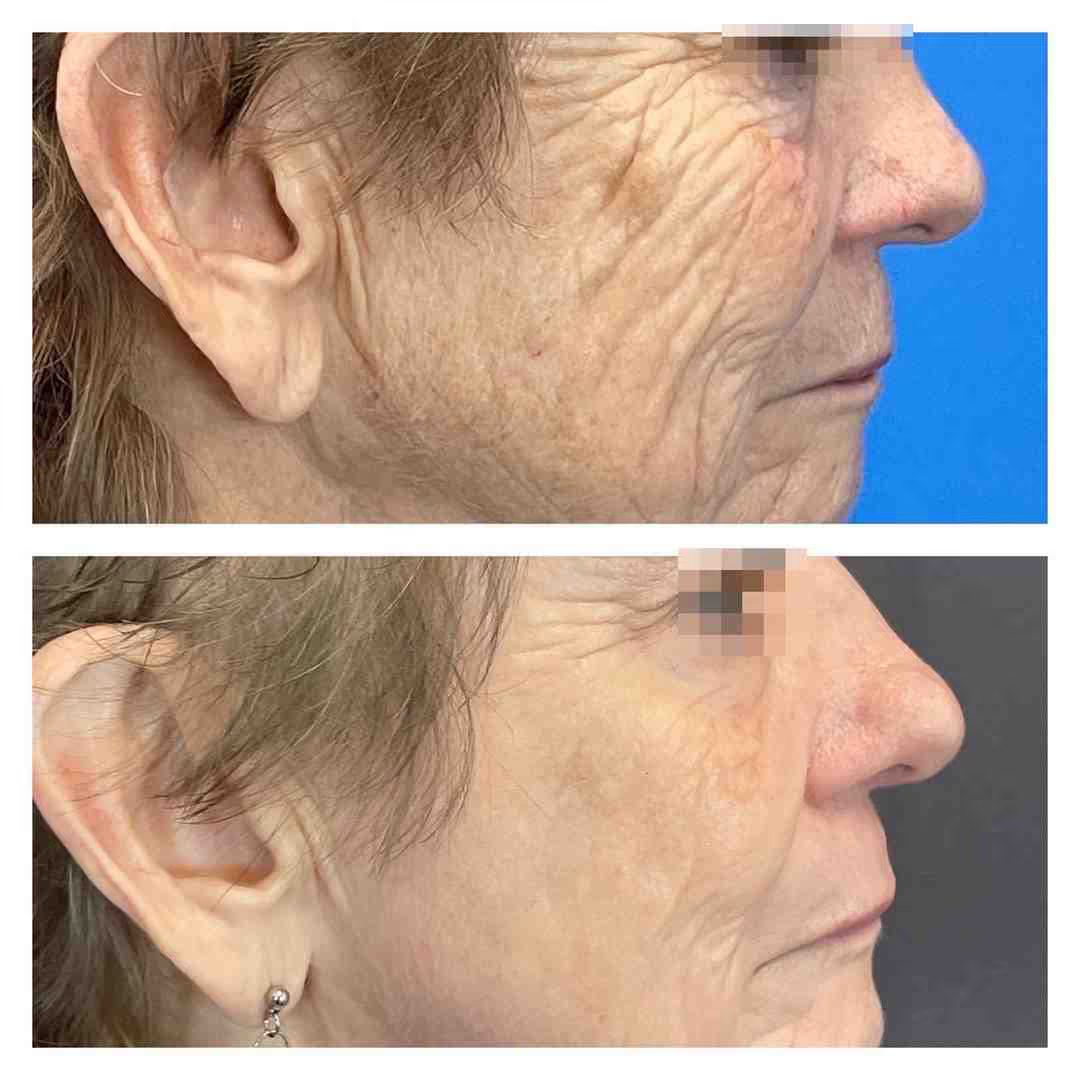
Fractional laser resurfacing is a game-changer for smoothing textural issues. Instead of treating the entire skin surface, these lasers create microscopic treatment zones surrounded by healthy tissue. This approach promotes faster healing while stimulating deep collagen remodeling.
Specific lasers can target redness and pigmentation with remarkable precision.
More info about IPL Laser treatments
Modern laser skin treatments can safely and effectively remove unwanted tattoos with minimal risk of scarring. The laser delivers ultra-short pulses of light that shatter ink particles into tiny fragments, which are then cleared away by the body's immune system.
More info about Laser Tattoo Removal
Every laser skin treatment begins with a thorough consultation with a board-certified provider to discuss your medical history, assess your skin, and design a safe, effective treatment plan.
Good candidates are generally in good health and wish to address concerns like wrinkles, sun damage, scars, uneven skin tone, and rosacea. However, laser treatments may not be suitable if you have an active skin infection, are pregnant or breastfeeding, or have certain autoimmune conditions. It's also crucial to wait at least six months after taking isotretinoin (Accutane) due to an increased risk of scarring. A history of keloid scarring or having a darker skin tone requires careful consideration by an experienced provider to minimize risks.
For a comprehensive understanding of candidacy, you can learn more about laser resurfacing candidacy.
Proper preparation is key to a successful outcome. General guidelines include:
Recovery varies depending on the type of laser used. Your provider will give you specific post-care instructions.
Laser TypeTypical DowntimeCommon Side EffectsPost-Care InstructionsPotential RisksAblative Lasers (e.g., CO2, Erbium)1-4 weeksRedness, swelling, peeling, crusting, weeping, itchingGentle cleansing, prescribed ointments, cool compresses, strict sun avoidanceInfection, scarring, hyperpigmentation, hypopigmentation, miliaNon-Ablative Lasers (e.g., ClearLift, Laser Genesis)0-2 daysMild redness, mild swelling, slight sensitivityGentle cleansing, moisturizing, broad-spectrum sunscreenRarely blistering, mild pigmentation changesFractional Lasers3-7 daysRedness, swelling, "sandpaper" texture, mild peelingGentle cleansing, moisturizing, broad-spectrum sunscreen, avoid direct sunSimilar to ablative or non-ablative depending on type, but reduced riskPulsed Dye Laser (PDL)0-1 weekRedness, swelling, purpura (bruising)Gentle cleansing, cool compresses, sun protectionTemporary bruising, rare pigmentation changes or blisteringIntense Pulsed Light (IPL)0-5 daysRedness, mild swelling, temporary darkening of pigmented spotsGentle cleansing, moisturizing, strict sun protectionRare blistering or temporary pigmentation changesLaser Tattoo Removal0-2 weeksRedness, swelling, blistering, crustingKeep clean and dry, apply ointment, cover with gauze, avoid sunInfection, scarring, incomplete removal, paradoxical ink darkening
After treatment, your skin will be delicate. Gentle cleansing, moisturizing, and strict sun protection are non-negotiable. Most side effects are temporary, but rare risks like infection, scarring, or pigmentation changes exist. Contact your provider immediately if you experience unusual pain, swelling, or signs of infection.
Laser skin treatments offer results that can last for years because they stimulate your body's natural collagen production to create genuine change. However, maintaining these results requires proper care to protect your investment from environmental factors and the natural aging process.
Protecting your results is straightforward with a few consistent habits:
The number of treatments depends on the laser and your goals.
Many patients benefit from maintenance sessions, such as an annual touch-up, to sustain their results and address new concerns. We can design a treatment plan that fits your skin, goals, and schedule.
We offer various Laser Packages that provide comprehensive treatment plans and better value than single sessions.
Considering laser skin treatments can bring up many questions. Here are answers to some of the most common ones we hear from our patients across Central Texas.
Discomfort levels vary by treatment, but most patients find it very manageable. Gentler procedures like IPL may feel like a mild stinging or a rubber band snap, and we use a topical numbing cream to ensure comfort. For more intensive ablative treatments, we use stronger topical anesthetics or local anesthesia to keep you comfortable. Your comfort is our priority, and we encourage open communication during your procedure.
The cost of laser skin treatments varies based on the type of laser used, the size of the treatment area, your geographic location, and the number of sessions required. Because these are typically cosmetic procedures, they are not usually covered by insurance. The best way to get an accurate cost estimate is to schedule a personalized consultation where we can assess your needs and provide transparent pricing. We also offer Laser Packages that can provide better value for a series of treatments.
Yes, but with the right technology and an experienced provider. Historically, lasers posed a higher risk of pigmentation changes (darkening or lightening) for skin with more melanin. However, modern lasers, especially those with longer wavelengths like Nd:YAG lasers, are much safer for diverse skin types. These lasers can bypass melanin in the top layer of skin to target deeper structures. The most critical factor for a safe and effective outcome is the expertise of your provider. An experienced specialist knows how to select the right laser and settings to minimize risk and achieve beautiful results for all skin tones.
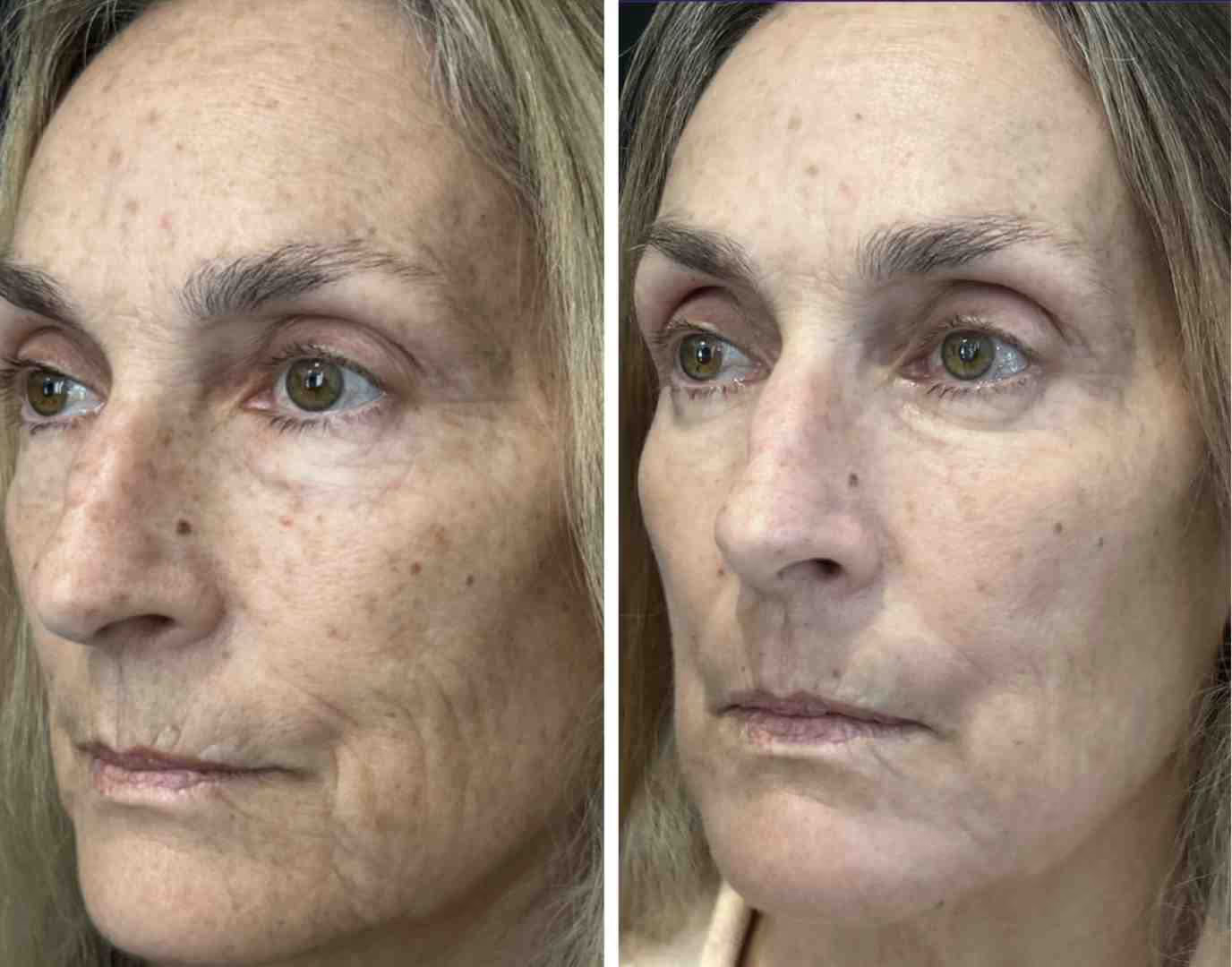
If you're ready to refresh your skin, laser skin treatments offer remarkable, versatile solutions. From smoothing fine lines and fading sun damage to refining texture and removing tattoos, modern laser technology is safer and more customizable than ever.
At Texas Eye Aesthetics, we combine personalized care with cutting-edge technology. With over 50 state-of-the-art devices and a century of combined experience, Dr. David Z. Gay and our expert team craft treatment plans that improve your natural beauty.
The journey to radiant skin begins with a conversation. During a consultation, we will listen to your concerns, examine your skin, and create a plan that fits your goals and lifestyle. We are proud to serve communities throughout Central Texas, including Dripping Springs TX, Kyle TX, and Temple TX, bringing world-class aesthetic care close to home.
If you've been thinking about refreshing your appearance, there's no better time to explore what's possible.


13830 Sawyer Ranch Road
Suite 201 Dripping Springs,
TX 78620
Inside Howerton Eye
4282 Farm to Market 1626
Suite 200
Kyle, TX 78640
Inside VIEW Temple
221 Paloma Drive
Temple, TX 76502
Inside New Braunfels Vision Center
1439 Hanz Drive
New Braunfels, TX 78130


