Does tear trough filler get rid of dark circles? The short answer is: it depends on what's causing your dark circles. Here's what you need to know:
Tear trough fillers are highly effective for:
Tear trough fillers are NOT effective for:
The key factor: Your dark circles need to be caused by a hollow that casts a shadow, not by pigmentation in the skin itself.
If you've been noticing persistent dark circles under your eyes, you're not alone. The rise of video calls has made many people more aware of under-eye hollows and shadows, leading them to seek solutions for an area that can make them look perpetually exhausted. Tear trough fillers, which use hyaluronic acid to restore volume, have become a popular non-surgical treatment for this very concern.
However, tear trough fillers aren't a miracle cure for everyone. Their effectiveness depends entirely on the underlying cause of your dark circles. If they stem from hollowing and volume loss, fillers can deliver impressive results. If they're from pigmentation or other factors, a different approach is needed.
This guide will walk you through how tear trough fillers work, who makes a good candidate, what to expect, and when other treatments might be more appropriate. By the end, you'll have the knowledge to make an informed decision about whether this treatment is right for you.
Easy does tear trough filler get rid of dark circles glossary:
Before we can answer does tear trough filler get rid of dark circles, we need to understand the cause. "Dark circles" is a catch-all term for different issues, which is why there's no single solution. What you see in the mirror could be a structural change, skin discoloration, or a combination of factors. Understanding the difference is crucial for finding a treatment that will actually work.
Let's break down the primary causes.
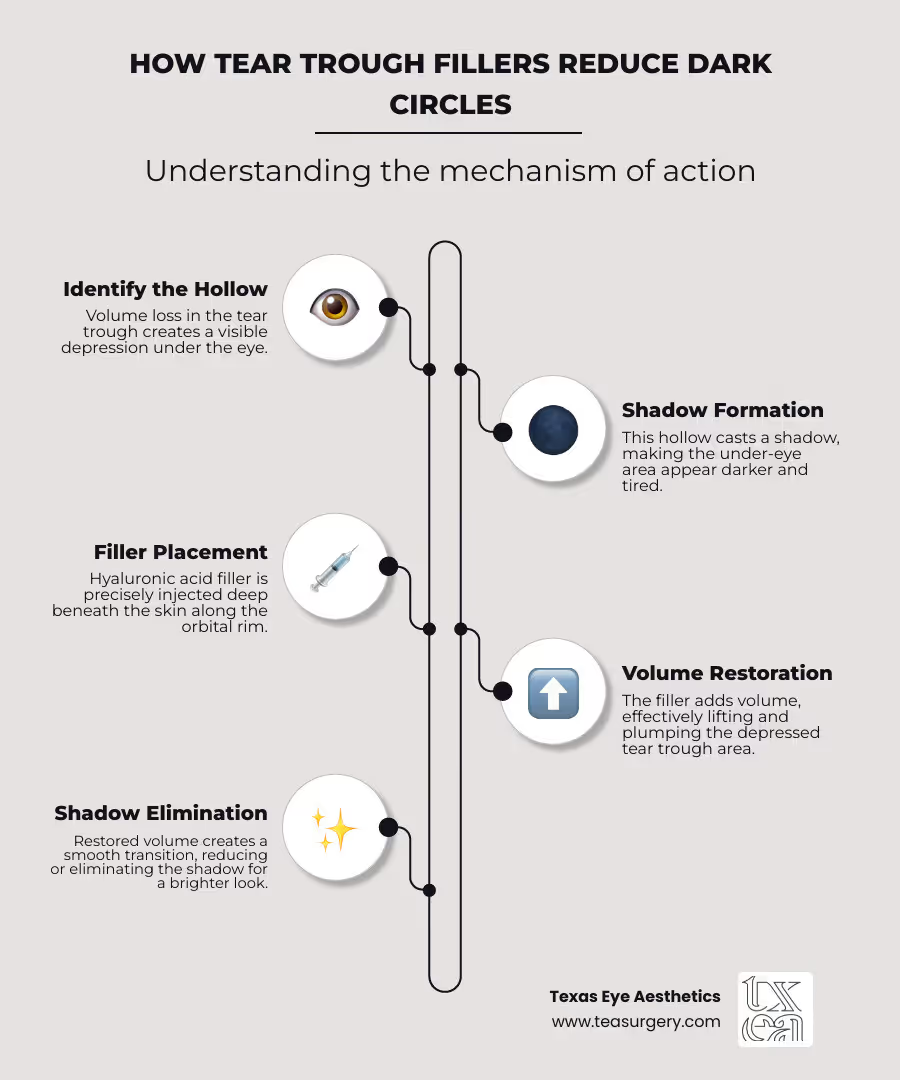
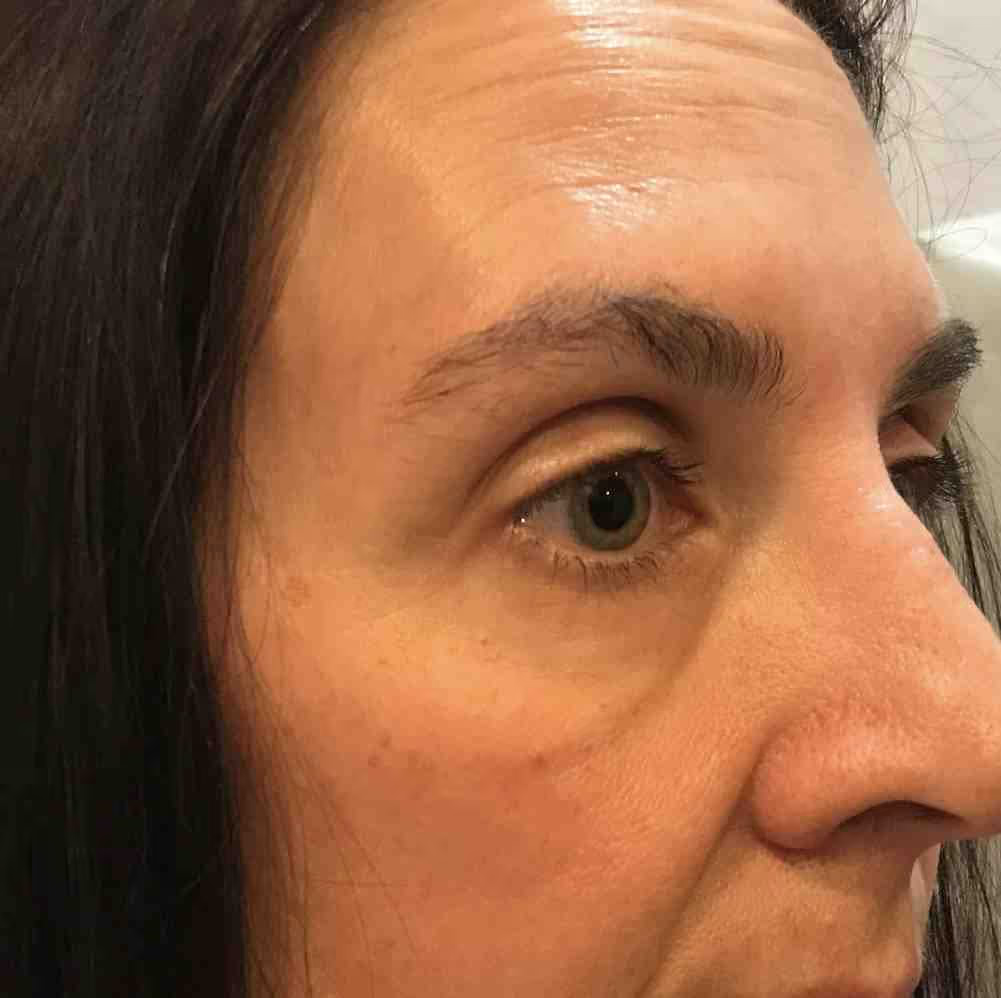
The tear trough is the natural groove running from the inner corner of your eye down your cheek. The skin here is the thinnest on your face, sitting over small fat pads and the tear trough ligament. When you're young, these fat pads are full, creating a smooth transition from eyelid to cheek. With age, the fat pads can shrink and descend, creating a hollow. This hollow casts a shadow that most people perceive as a dark circle. If your dark circles are caused by this hollowing, fillers can be transformative by restoring lost volume.
Because under-eye skin is so thin, it can be almost transparent. This allows the blood vessels beneath to show through, creating a bluish or purplish tint, especially in those with fair skin. This is a color issue, not a shadow. While fillers might help slightly by adding a layer between the vessels and the skin, they won't completely resolve this type of darkness.
Sometimes, dark circles are caused by hyperpigmentation—excess melanin that creates brown or brownish-purple discoloration in the skin itself. This can be due to sun damage, inflammation, or genetics. Since this is an issue of skin color, not volume, fillers are not an effective treatment. They address structure, not pigment.
Genetics play a major role. You might have been born with a prominent tear trough due to your bone structure or having naturally less fat in the under-eye area. If you've had dark circles since you were young, your anatomy is likely the primary factor. While this is a structural issue that fillers can address, it's important to know you're working with your natural anatomy, not necessarily a sign of aging.
Lifestyle factors like chronic sleep deprivation, dehydration, sun exposure, allergies, and smoking can worsen the appearance of your under-eye area by causing fluid retention and accelerating skin aging. However, if you have significant hollowing, a healthy lifestyle alone won't replace lost volume. It can optimize your results but won't fix the underlying structural issue.
The answer to does tear trough filler get rid of dark circles depends entirely on the cause. If your issue is hollowing and shadows, fillers can be remarkably effective. If it's pigmentation or visible blood vessels, you'll need a different approach. A professional evaluation is essential to diagnose the cause correctly and recommend the most appropriate treatment plan.
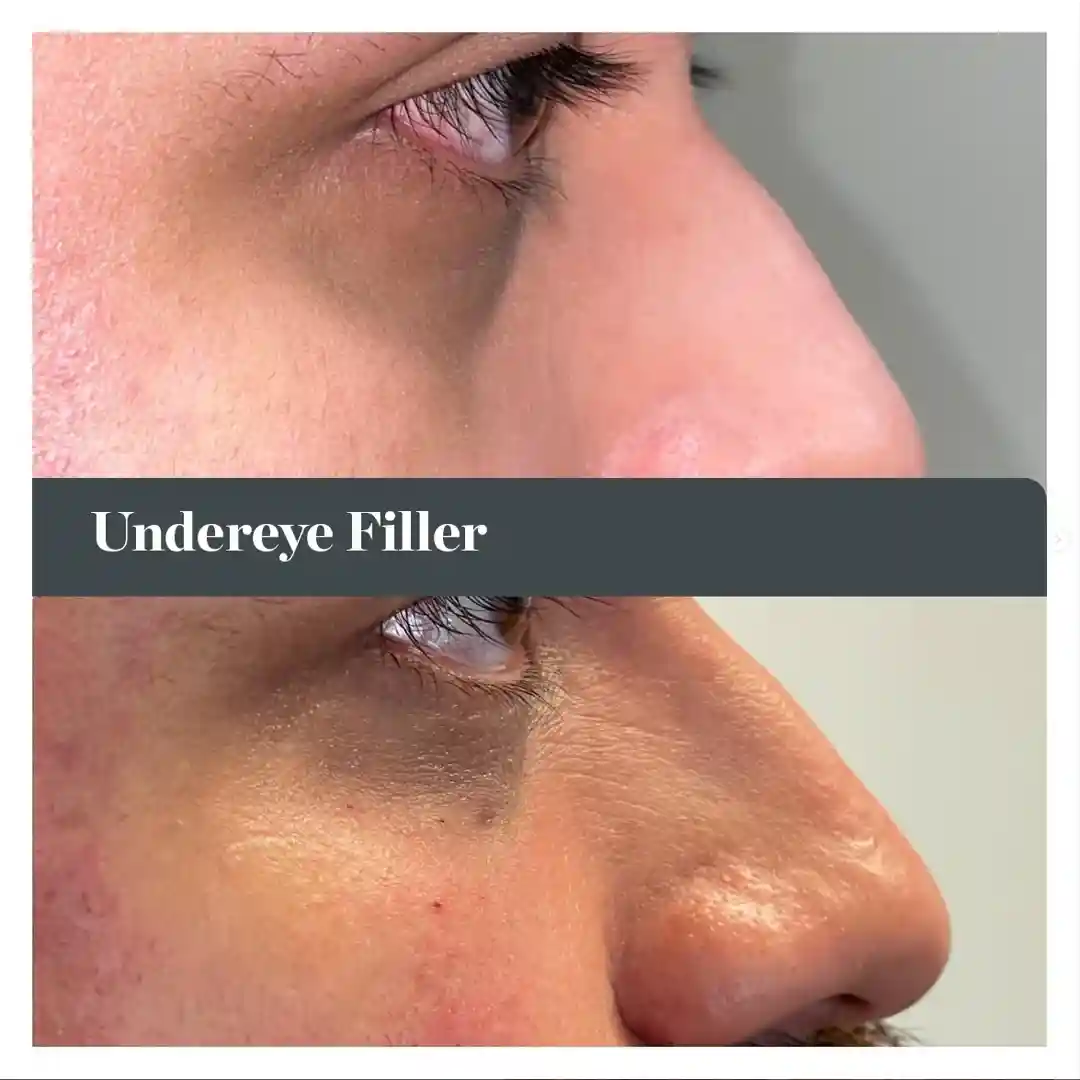
Let's get straight to the heart of it: does tear trough filler get rid of dark circles? For many people, the answer is a genuine "yes." When dark circles are caused by hollowing and the shadows they create, tear trough fillers can deliver impressive results, helping you look as rested as you feel. We've seen countless patients walk away with renewed confidence after this treatment.
The secret ingredient is hyaluronic acid (HA), a substance your body naturally produces to keep skin plump and hydrated. As a biocompatible and non-permanent substance, HA has become the gold standard for under-eye rejuvenation.
Think of a tear trough hollow as a valley that casts a shadow. The filler's job is to fill that valley. First, the HA gel provides volume replacement, literally plumping up the hollow area. As it adds volume, it lifts the skin, smoothing the indentation and creating a more youthful contour between the lower eyelid and cheek. This lift dramatically changes how light reflects off the under-eye area. Instead of being absorbed by a shadow, light bounces off a smooth surface, and the "darkness" disappears. Finally, the hydrating properties of HA attract water, improving skin texture and quality for an overall refreshed look. The goal is to sculpt a natural, harmonious contour that makes you look well-rested, not "done."
While highly effective, fillers are not a magic wand for every type of dark circle. It's crucial to have realistic expectations.
Fillers excel when dark circles are caused by hollows and shadows. If volume loss is your issue, fillers are an ideal solution to reduce the appearance of darkness.
However, fillers are less effective for pigmentation. If your dark circles are from brownish skin discoloration (excess melanin), adding volume won't lighten the pigment. To check, stand in bright light and look up. If the circles disappear, they're likely shadow-based. If the color remains, you're dealing with pigmentation.
Tear trough fillers are also not suitable for large eye bags. Adding filler to significant puffiness caused by fat pushing forward can make the problem look worse. In these cases, a surgical option like lower blepharoplasty is often more appropriate.
You can try a simple "thumb displacement test" at home. Gently place your thumb on your cheekbone below the tear trough and push upward. If the dark circle diminishes, it's a good sign that volume loss is the culprit and fillers may work well. If the darkness remains, another treatment might be better.
Self-assessment has its limits. A professional evaluation is essential. An experienced injector can accurately diagnose the cause of your dark circles and determine the right treatment plan. We often use comprehensive diagnostic frameworks, including research-based approaches for assessing dark circles, to ensure we're addressing your specific concerns. Every face is unique, and what works for one person might not be ideal for another.
Starting on an aesthetic treatment can feel daunting, especially in the delicate under-eye area. Understanding the process can help transform apprehension into confidence. At Texas Eye Aesthetics, we want you to feel informed and comfortable at every stage.
Your journey begins with a thorough consultation to discuss your concerns, medical history, and goals. We'll examine your under-eye area, skin quality, and midface structure. Good candidates typically have noticeable hollowing, good skin quality, and realistic expectations. If you have significant eye bags or extremely thin skin, we may discuss other options that could work better for you.
When it comes to your face, experience matters. We cannot emphasize enough the importance of seeing a well-qualified, board-certified physician who performs this procedure frequently. The under-eye area is complex, and an oculoplastic surgeon has specialized knowledge of the intricate structures around the eyes.
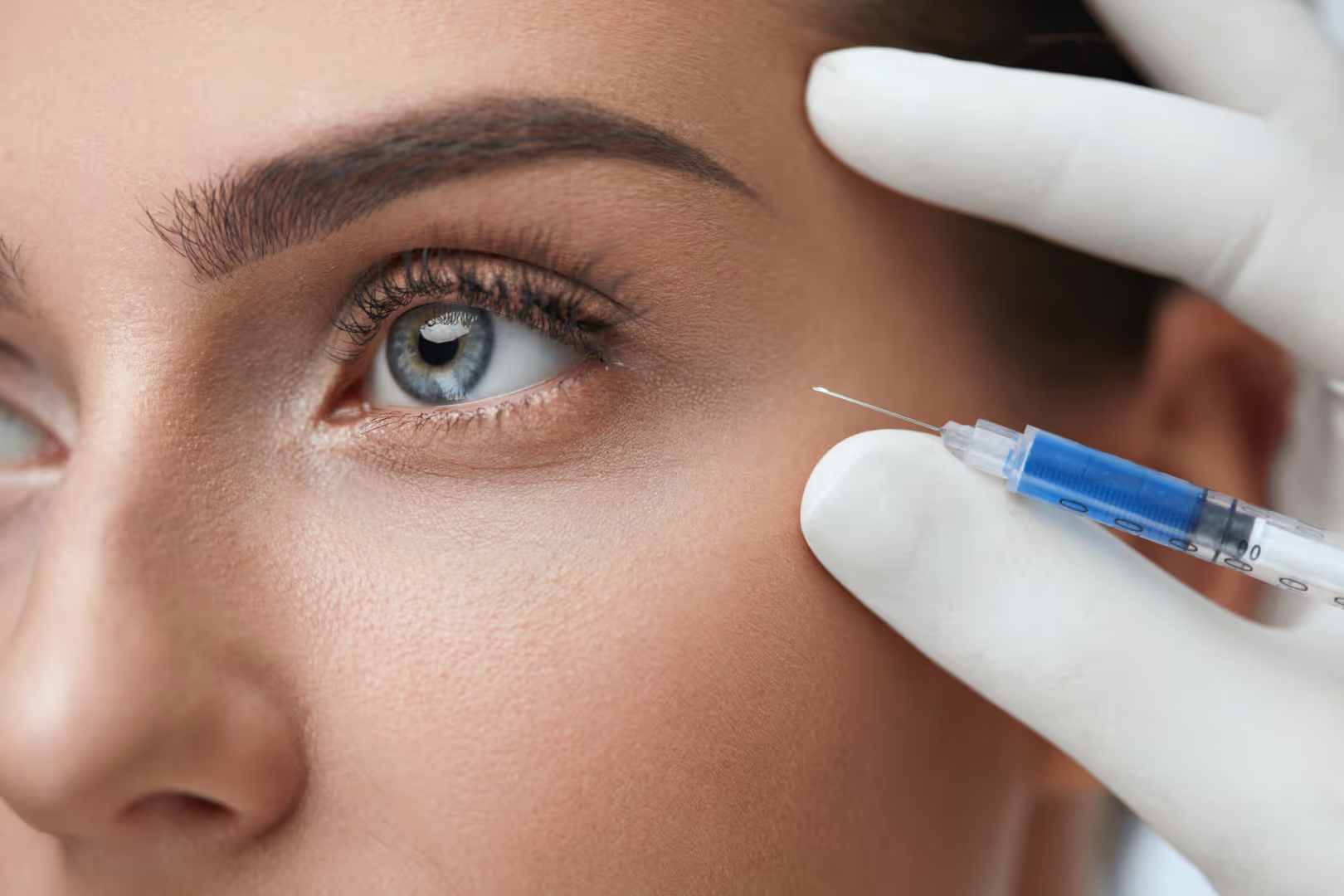
Once we determine that fillers can address your concerns, the treatment itself is quick, usually taking 20 to 30 minutes. We start with a topical numbing cream, and the fillers we use also contain lidocaine to minimize discomfort. Dr. David Z. Gay, our expert oculoplastic surgeon, uses a blunt-tipped cannula to gently inject the filler deep beneath the skin. This technique is safer and significantly reduces the risk of bruising and swelling compared to a sharp needle.
For safety and the best results, only hyaluronic acid (HA) based fillers should be used under the eyes. This is crucial because HA fillers are not only effective but also reversible—a significant safety advantage. We select specific fillers with properties ideal for the delicate under-eye area.
There is minimal downtime, and you can return to your normal routine almost immediately. You'll notice an immediate improvement, looking more rested and refreshed. Some mild swelling, redness, or bruising is normal and typically fades within a few days. We provide aftercare instructions, which usually include applying ice packs and avoiding vigorous exercise for 24 hours. To minimize bruising, we also recommend avoiding blood-thinning medications like aspirin or NSAIDs for several days before your appointment.
The results are long-lasting, with most patients enjoying the effects for 9 to 12 months, and sometimes up to 18 months. The under-eye area tends to hold filler longer than more mobile parts of the face.
While HA fillers are very safe when administered by an experienced professional, it's important to be aware of potential risks.
The most common side effects are temporary and mild, including bruising, swelling, and tenderness. A specific concern is the Tyndall effect, a bluish tint that can occur if filler is placed too superficially. Small lumps can also occur but can usually be massaged out or dissolved.
A more significant concern is malar edema, where filler may interfere with lymphatic drainage, causing puffiness. This is why precise placement and filler selection by an expert are so crucial.
Extremely rare but serious complications include allergic reactions, infection, and vascular occlusion (filler entering a blood vessel). This underscores why choosing a highly qualified, experienced injector is essential for your safety. At Texas Eye Aesthetics, patient safety is our highest priority.
While tear trough fillers are an excellent solution for many, they are just one tool in a larger toolkit. Understanding when to choose fillers versus other options—or how to combine them—is key to achieving a natural, refreshed look.
Let's break down how different treatments compare:
Treatment TypePrimary TargetDowntimeLongevityTear Trough FillersVolume loss, hollows, shadowsMinimal (0-2 days)9-18 monthsLower BlepharoplastySignificant fat bags, excess skin, muscle laxityWeeks10+ years (permanent)
The right treatment depends on your specific issue.
Yes, and combination therapy often yields the most natural and comprehensive results.
A comprehensive approach that addresses volume loss, skin quality, and dynamic wrinkles simultaneously often delivers the most harmonious and refreshed results. An experienced provider can develop a treatment strategy customized to your unique facial anatomy and goals.
We know that considering an aesthetic treatment comes with questions. We believe that the more you understand about does tear trough filler get rid of dark circles and the process itself, the more confident you'll feel. Here are the questions we hear most often from patients in the Hill Country, Dripping Springs TX, Kyle TX, and Temple TX areas.
The cost of treatment depends on your provider's expertise, your geographic location, the type of filler used, and the amount required to achieve your desired results. When it comes to your face, this is not a procedure where you should price-shop. The tear trough is an incredibly delicate area. Choosing an experienced oculoplastic surgeon like Dr. David Z. Gay is an investment in both your safety and the quality of your outcome. We encourage you to schedule a personalized consultation to receive a detailed assessment and a clear understanding of your treatment plan.
Most patients report minimal discomfort rather than pain. Before the treatment, we apply a topical numbing cream to desensitize the skin. Additionally, the hyaluronic acid fillers we use contain lidocaine, a local anesthetic, which improves comfort during the procedure. You might feel a slight pinch or a sensation of pressure, but most patients find the experience surprisingly easy.
This highlights one of the most reassuring aspects of using hyaluronic acid (HA) fillers: they are reversible. If you are not satisfied with the outcome or if a complication occurs, we can use an enzyme called hyaluronidase to dissolve the filler. This enzyme breaks down the HA, allowing your body to absorb it naturally. This reversibility provides a crucial safety net and is a key reason why only HA-based fillers should be used in the under-eye area.
That said, a follow-up appointment a couple of weeks after your treatment is very important. Once any initial swelling has subsided, we can assess your results together, address any concerns, and make minor adjustments if needed to ensure you are happy with your refreshed appearance.
So, does tear trough filler get rid of dark circles? By now, you know the answer isn't simply yes or no—it depends entirely on what's causing those shadows under your eyes.
If your dark circles stem from volume loss and the hollowing that creates shadows, tear trough fillers can be remarkably effective. They restore volume, smooth the transition from eyelid to cheek, and help you look as rested as you actually feel. The immediate yet subtle results often lead to high patient satisfaction, making this one of the most sought-after non-surgical treatments we offer.
But here's what you need to remember: fillers aren't a magic solution for every type of dark circle. If your concerns are rooted in skin pigmentation, visible blood vessels, or significant puffiness, you'll need a different approach. True pigmentation won't respond to volume replacement. Prominent eye bags might require surgery rather than injectable treatments. And in some cases, combining multiple treatments—fillers with lasers, topical treatments, or mid-cheek support—delivers the most comprehensive results.
This is exactly why a personalized consultation is so important. The under-eye area is one of the most delicate and complex regions of the face. Getting the diagnosis right, choosing the appropriate treatment, and executing it safely requires genuine expertise. As an oculoplastic surgeon, Dr. David Z. Gay at Texas Eye Aesthetics brings specialized training in the intricate anatomy around the eyes—knowledge that goes far beyond what general injectors may have.
During your consultation, we'll examine your unique facial structure, discuss what's realistic for your situation, and create a treatment plan custom specifically to you. We'll be honest if fillers aren't the right choice and recommend alternatives that will actually work. Your safety and satisfaction are always our top priorities.
If you're ready to stop looking perpetually tired and want to explore your options with someone who truly understands the complexities of the under-eye area, we're here to help. For a comprehensive evaluation in Central Texas, including the Hill Country, Dripping Springs TX, Kyle TX, and Temple TX areas, schedule your personalized consultation at Texas Eye Aesthetics today. Let's work together to find the best path toward the refreshed, confident look you deserve.


13830 Sawyer Ranch Road
Suite 201 Dripping Springs,
TX 78620
Inside Howerton Eye
4282 Farm to Market 1626
Suite 200
Kyle, TX 78640
Inside VIEW Temple
221 Paloma Drive
Temple, TX 76502
Inside New Braunfels Vision Center
1439 Hanz Drive
New Braunfels, TX 78130


