Does skin cancer on eyelid hurt? Most people expect cancer to be painful, but eyelid skin cancer usually doesn't hurt at all. This painless nature can actually make it more dangerous, as many people ignore the warning signs until the cancer has grown significantly.
Quick Answer:
The thin, delicate skin around your eyes is extremely vulnerable to sun damage. About 95% of eyelid cancers result from UV exposure, yet many people skip sunscreen in this sensitive area. Unlike a stye or infection that throbs and aches, skin cancer on your eyelid typically grows silently.
This doesn't mean you should ignore it. Basal cell carcinoma - the most common type - may start as a small, pearly bump that slowly gets bigger over months. Without treatment, it can destroy eyelid tissue and even threaten your vision.
Understanding what to look for beyond pain can help us catch eyelid cancer early, when treatment is most effective and reconstruction is simpler.
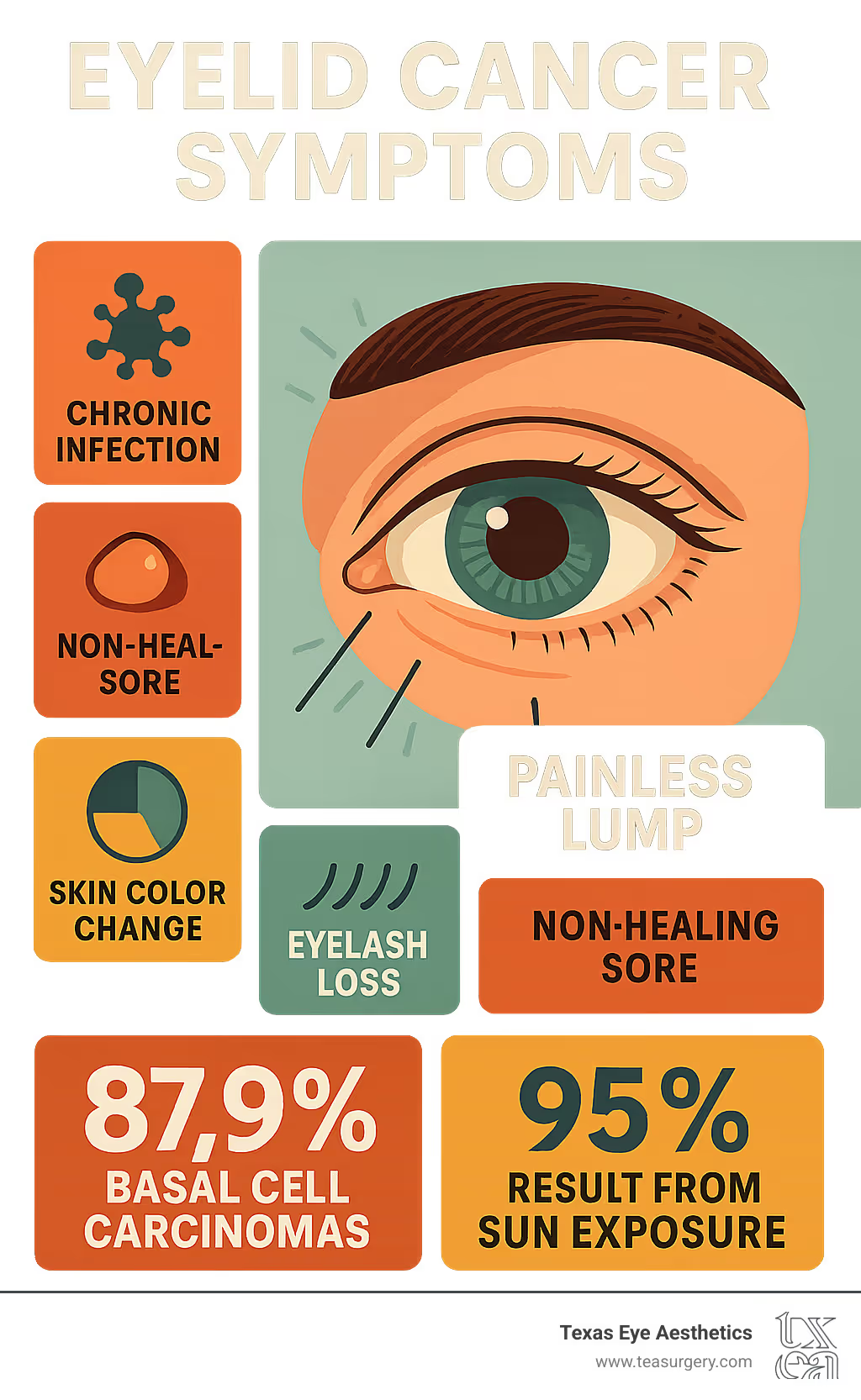
Eyelid cancer is a master of disguise. While many people ask "does skin cancer on eyelid hurt?" expecting pain to be a warning signal, these growths often cause different symptoms that can be mistaken for other conditions.
The most common sign is a new growth or lump on the eyelid. Unlike a pimple, this persistent bump lasts for weeks, often has a pearly or shiny appearance, and may have a pinkish tint. It typically starts small and grows gradually.
Another major warning sign is a non-healing sore. This is a small cut or scrape that doesn't heal, may bleed occasionally, or develops a crust that never clears up.
Bleeding or crusting from a growth on the eyelid is a significant symptom. Skin cancer can disrupt normal tissue, causing persistent irritation that doesn't respond to typical treatments.
You might also notice changes in your eyelid skin's appearance—perhaps it becomes scaly, rough, or develops unusual coloring. Sometimes the eyelid develops swelling or thickening that doesn't match the other side, creating an asymmetric look that persists over time.
One particularly telling symptom is eyelash loss in a specific area without any obvious cause. This localized hair loss, combined with what looks like a "notch" in the eyelid, can indicate that a growth is interfering with normal eyelid structure.
Sometimes eyelid cancer masquerades as a chronic eyelid infection that won't respond to standard treatments. If you're dealing with persistent eyelid infections that keep coming back, it's worth having a specialist take a closer look.
Excessive tearing can also be a symptom, especially when a growth irritates the eye or affects how tears drain properly.
Eyelid cancer can be mistaken for a stye or blepharitis early on. A stye is usually painful and resolves quickly, while cancer is often painless and persistent. Any unusual or lasting changes around your eyes warrant professional attention, even without pain.
A surprising fact is that for most people, skin cancer on the eyelid doesn't hurt. This painless nature often catches patients off guard, as they expect discomfort to be a primary symptom.
Most eyelid cancers grow quietly, without the throbbing pain of a stye or infection. This silent growth makes eyelid cancer sneaky and highlights the importance of regular self-exams.
Basal cell carcinoma (BCC), making up about 87.9% of eyelid cancers, is typically painless. You might notice a small, pearly bump or a non-healing sore, but usually without any pain.
BCCs are slow-growing tumors that develop over months or years. Unlike a stye, which causes immediate throbbing from inflammation, these cancers don't usually irritate nerve endings or cause the rapid tissue swelling that leads to pain.
Because of this gradual growth, you might not feel anything unusual. This lack of pain is why many people ignore these growths until they are large. Any suspicious, painless change around your eyes should be checked by a board-certified dermatologist.
Though rare, pain with eyelid cancer is possible. When skin cancer on eyelid does hurt, it can be a sign of a more serious issue like perineural invasion, where cancer cells grow into nearby nerves. This indicates aggressive growth and requires immediate attention.
Pain can also come from complications. A large tumor can distort the eyelid, causing eyelashes to turn inward (trichiasis). This constant rubbing of lashes against the eye's surface is painful.
Secondary complications like chronic irritation or corneal damage can also cause pain. Any new or persistent pain around your eyelid, especially with other suspicious changes, requires immediate professional evaluation.
Even without pain, eyelid cancer can cause other sensations. Patients may describe numbness or a pins-and-needles sensation, which could indicate nerve involvement.
Persistent itching is another red flag, as is extreme sensitivity to touch or temperature. A tumor on the inner eyelid might cause a constant feeling of something foreign in your eye.
These subtle sensations are important warning signs. While not always painful, they warrant a closer look from an experienced oculoplastic specialist.
The eyelid can develop different types of skin cancer, each varying in aggressiveness and potential to spread.
Basal Cell Carcinoma (BCC) is the most common type of eyelid cancer, accounting for 87.9% of cases. It often appears on the lower eyelid near the inner corner.
BCC progresses slowly and rarely spreads, meaning the outlook is generally favorable. However, without early treatment, it can cause significant tissue destruction, vision loss, and disfigurement. It can be mistaken for a stye, with symptoms including a persistent, pearly lump or a non-healing sore that may bleed or crust.
Squamous Cell Carcinoma (SCC) accounts for about 11.1% of eyelid cancers and is more aggressive than BCC. It has a higher chance of spreading to nearby lymph nodes and can become life-threatening if untreated.
SCCs can appear as a scaly patch, a firm red lump, or an open sore. They tend to grow more rapidly than BCCs and are more prone to bleeding. Prompt diagnosis and treatment are critical, as SCC is more likely to grow and spread than BCC.
Rarer, more aggressive types of eyelid cancer include:
The key takeaway is that any suspicious growth on your eyelid should be evaluated by a specialist to determine its type and ensure timely treatment.
If you notice a suspicious change on your eyelid, the process involves diagnosis, treatment, and reconstruction. At Texas Eye Aesthetics, our goal is to guide you through each step, aiming for the best possible functional and aesthetic outcomes.
Diagnosis begins with an examination by an oculoplastic specialist. We inspect the eyelid for signs like asymmetry, bleeding, or eyelash loss and review your medical history, including sun exposure and family history of skin cancer.
If a lesion is suspicious, a biopsy is the gold standard for diagnosis. A small tissue sample is taken in-office under local anesthesia and sent to a pathologist. The pathologist examines it to identify cancer cells and determine the type, which confirms the diagnosis and helps plan treatment.
Once diagnosed, the goal is to completely remove the cancer while preserving as much healthy eyelid tissue as possible.
Treatment choice depends on the cancer's type, size, location, and depth. Our team will discuss the best options for you.
After cancer removal, eyelid reconstruction is the next critical step. The goal is to restore the eyelid's essential functions (blinking, eye protection, tear drainage) and achieve the best possible cosmetic appearance.
The delicate skin around your eyes faces a daily battle against one of its biggest enemies: the sun. Understanding what puts you at risk for eyelid cancer - and more importantly, how to protect yourself - can make all the difference in keeping your eyes healthy for years to come.
UV radiation is the primary cause of eyelid skin cancer, and the statistics are eye-opening. About 95 percent of eyelid cancers in the United States stem directly from sun exposure. Think about it - when you're outside, your eyelids are getting hit with UV rays all day long, and most of us never think to protect this vulnerable area.
While anyone can develop eyelid cancer, some people face higher odds than others. Fair skin is one of the biggest risk factors because it contains less protective melanin. If you have light-colored eyes, blond or red hair, you're in this higher-risk category too.
Age plays a significant role - most eyelid cancers occur in people between 50 and 80 years old. This makes sense when you consider that sun damage accumulates over decades. Men statistically face higher risks than women, though the exact reasons aren't entirely clear.
Your family history matters as well. If skin cancer runs in your family, you'll want to be extra vigilant about protection and regular check-ups. People with weakened immune systems - whether from autoimmune diseases, certain medications, or treatments like chemotherapy - also face liftd risks.
Smoking cigarettes increases your chances too, as it weakens your immune system and damages skin cells throughout your body, including those delicate eyelids.
The good news? You have significant control over your eyelid cancer risk. Sun protection is your best defense, and it doesn't have to be complicated.
Sunscreen with SPF 30 or higher should become your daily habit, even on cloudy days in Central Texas. Apply it to your eyelids and the surrounding skin every morning. Look for mineral sunscreens or formulas designed for sensitive eye area skin - they're less likely to sting if they accidentally get in your eyes. Remember to reapply every two hours, especially if you're spending time outdoors.
UV-blocking sunglasses are essential, not just fashionable. Choose ones that provide 99% to 100% protection against both UVA and UVB radiation. Wraparound styles give you the most comprehensive coverage, protecting not just your eyes but the skin around them too.
Wide-brimmed hats with at least a 3-inch brim can block up to half of the UV rays trying to reach your face. In the bright Texas sun, this extra layer of protection is invaluable.
Timing matters when it comes to sun exposure. The sun's UV rays are strongest between 10 a.m. and 4 p.m. If possible, seek shade during these peak hours, especially during our intense Texas summers.
Regular self-exams of your eyelids should become as routine as brushing your teeth. Look for new growths, changes in existing spots, or sores that won't heal. Early detection makes treatment much simpler and more effective.
Finally, maintain a healthy lifestyle to keep your immune system strong. Avoid smoking, limit alcohol, manage stress, and get enough sleep. A robust immune system helps your body fight off abnormal cell growth before it becomes a problem.
By making these protective habits part of your daily routine, you're giving your eyes the best possible defense against cancer while still enjoying life in beautiful Central Texas.
Finding a suspicious growth on your eyelid can be frightening. Here, we address some of the most common questions we hear from patients in Central Texas.
The seriousness depends on the cancer type and how early it's caught. Not all eyelid cancers are the same.
Basal Cell Carcinoma (BCC) is the most common type (nearly 88% of cases). It's typically not as serious because it grows slowly and rarely spreads. With proper surgical treatment, cure rates can be as high as 95%.
However, its location on the eyelid means it can affect vision and appearance if left untreated. If the cancer grows too large, it can cause significant changes. Early treatment is key to preventing this.
Squamous Cell Carcinoma (SCC) (about 11% of cases) carries more risk. It's highly treatable when caught early but has a higher chance of spreading to lymph nodes than BCC.
Rarer types like melanoma are much more serious. These aggressive cancers require immediate attention and can be life-threatening if they spread.
The bottom line is that most eyelid cancers have excellent outcomes with prompt treatment. The key is not to wait.
Recovery varies depending on the cancer's size, location, and the complexity of the reconstruction.
Initial healing takes a few weeks. Sutures are typically removed within one to two weeks. Noticeable swelling and bruising during this period are normal.
Swelling and bruising can be significant. We recommend sleeping with your head liftd and using cold compresses to help minimize it.
Complete recovery takes longer. The scar tissue continues to mature and improve for several months, up to a year, gradually becoming softer and less noticeable.
Some patients experience temporary side effects like dry eye or excessive tearing, which usually improve or can be managed with eye drops. Our team provides detailed aftercare instructions.
Yes, this happens often. The early stages of eyelid cancer, particularly basal cell carcinoma, can look very similar to a harmless stye.
Here's how to tell the difference:
Our rule of thumb: if you have a painless bump on your eyelid that persists for more than two to three weeks or is growing, have it evaluated by a specialist. It's better to check than to wait and miss something important. Early detection makes treatment easier, recovery faster, and results better. If you're concerned about any growth on your eyelid, we're here to help put your mind at ease or get you the treatment you need.
After exploring the complexities of eyelid cancer, one thing becomes crystal clear: does skin cancer on eyelid hurt is the wrong question to focus on. The real concern isn't pain - it's the sneaky, silent nature of these growths that makes them so dangerous.
Most eyelid cancers, particularly basal cell carcinoma which accounts for nearly 88% of cases, develop without any discomfort at all. They quietly establish themselves on your eyelid, growing slowly over months or years while you remain completely unaware. This painless progression is exactly why visual changes become your most important early warning system.
Watch for the telltale signs - a new bump that won't go away, a sore that refuses to heal, unexplained eyelash loss, or persistent bleeding and crusting. These symptoms matter far more than pain when it comes to catching eyelid cancer early. When pain does occur, it's often a sign that the cancer has become more aggressive or is affecting nearby nerves, making immediate medical attention even more critical.
The good news is that early detection leads to excellent outcomes. With prompt treatment, cure rates can reach 95%, and modern reconstruction techniques can restore both function and appearance beautifully. The key is not waiting for pain that may never come.
Protecting your eyelids from sun damage remains your best defense. Those delicate tissues around your eyes need daily sunscreen, quality UV-blocking sunglasses, and wide-brimmed hats - especially here in Central Texas where our intense sun exposure contributes to 95% of eyelid cancer cases.
If you've noticed any suspicious changes around your eyes, don't let the absence of pain lull you into a false sense of security. The specialists at Texas Eye Aesthetics have extensive experience diagnosing and treating eyelid conditions, from the initial evaluation through complete reconstruction when needed.
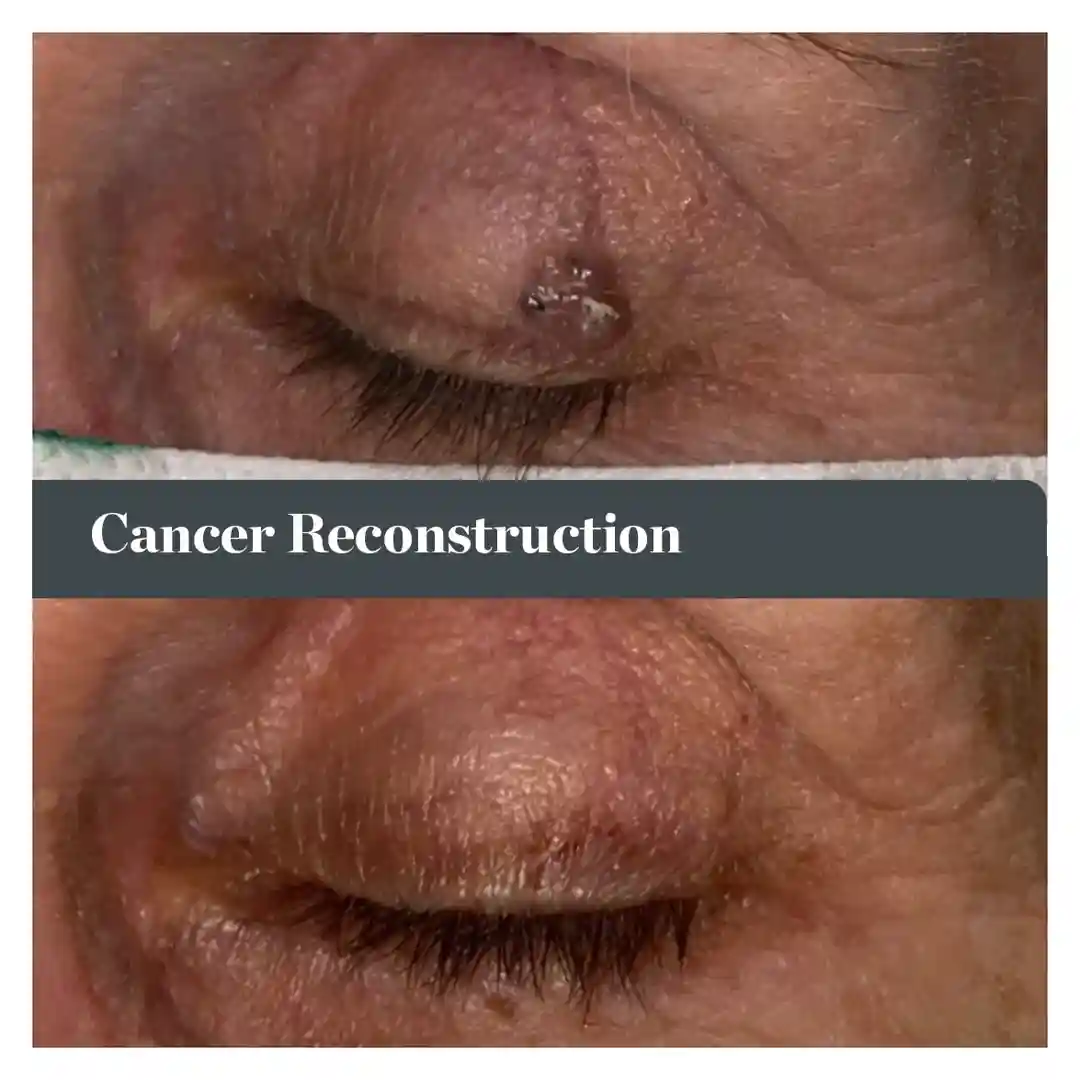
We're here to guide you through every step of the process with the expertise and compassionate care you deserve. Learn more about our advanced Cancer Reconstruction options and schedule a consultation with our team today. Your vision and the health of your eyelids are too precious to leave to chance.


13830 Sawyer Ranch Road
Suite 201 Dripping Springs,
TX 78620
Inside Howerton Eye
4282 Farm to Market 1626
Suite 200
Kyle, TX 78640
Inside VIEW Temple
221 Paloma Drive
Temple, TX 76502
Inside New Braunfels Vision Center
1439 Hanz Drive
New Braunfels, TX 78130


