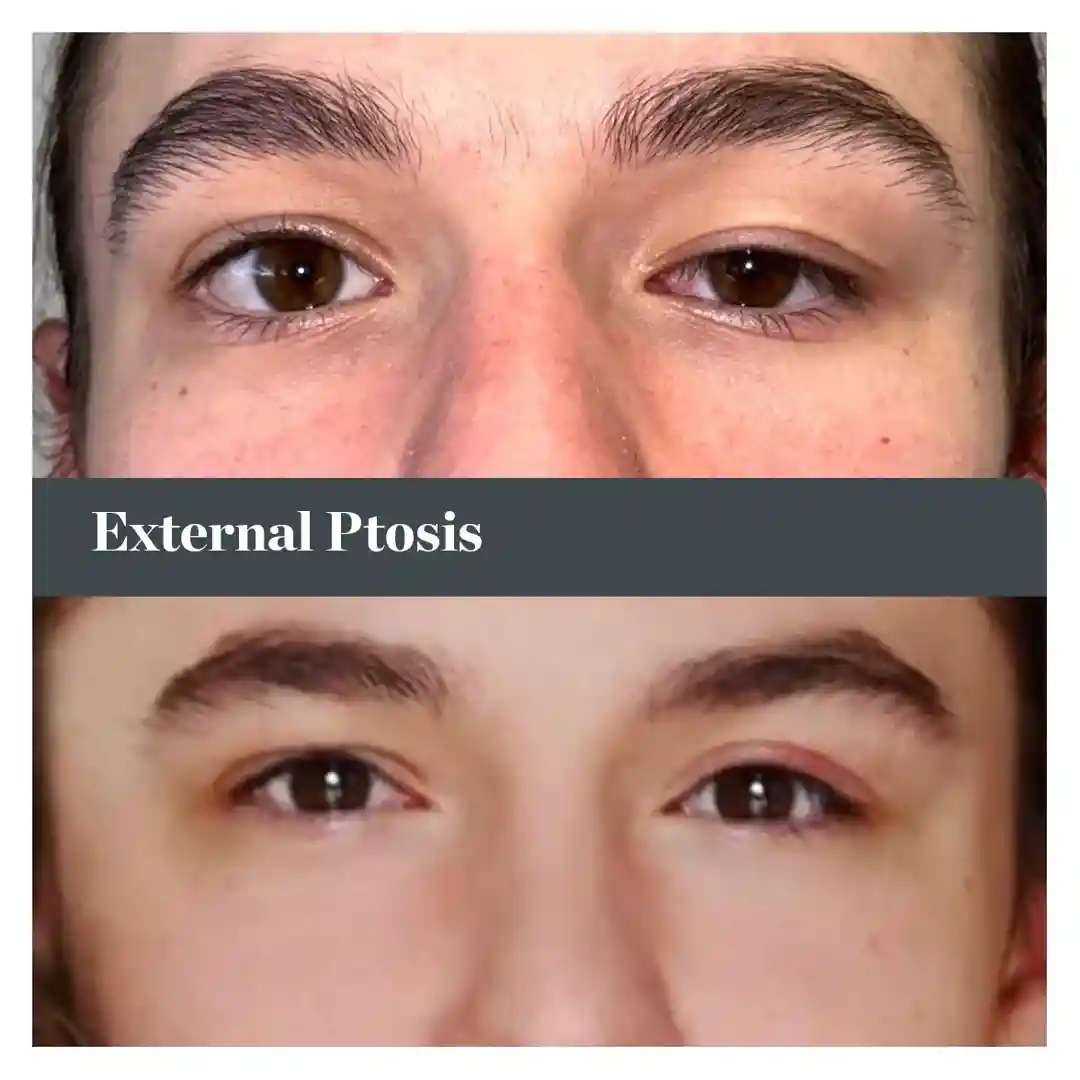
Blepharoptosis is the medical term for a drooping upper eyelid. This condition occurs when the upper eyelid margin falls to a lower position, sometimes partially or completely covering the pupil. It can affect one or both eyes and ranges from barely noticeable to severe enough to block your vision.
Quick Facts About Blepharoptosis:
Blepharoptosis isn't just about looking tired. For many, it's a functional problem that makes everyday activities like reading or driving difficult. Children with severe drooping may tilt their heads back to see, which can lead to neck problems, while adults often raise their eyebrows all day, leading to forehead fatigue and headaches.
The good news is that this condition is highly treatable. Whether you were born with it or developed it later in life, modern treatments can restore both your vision and your confidence.
Understanding what's happening with your eyelids is the first step toward finding the right solution. Let's break down the causes, diagnosis, and treatments for this condition.
Blepharoptosis basics:
At its core, blepharoptosis (often just called ptosis) means your upper eyelid isn't sitting where it should. In a healthy eye, the upper lid rests about 1.5 millimeters below the top edge of your iris (the colored part of the eye), or about 3.5 millimeters above the center of the pupil. When that lid drops lower, it can range from a minor droop to a complete curtain over your eye. Understanding the cause is essential because it determines the best treatment.
Blepharoptosis is divided into two main categories: congenital (present from birth) and acquired (developing later in life).
Congenital Ptosis is present at birth, usually because the main lifting muscle (levator palpebrae superioris) didn't develop properly. This developmental issue, called myogenic dysgenesis, can sometimes run in families but often occurs spontaneously.
Acquired Ptosis develops after birth and comes in several varieties:
What Puts You at Risk?
While some causes are unavoidable, several factors increase your risk. Aging is the primary factor. Long-term contact lens wear has also been linked to ptosis, possibly due to repeated tugging on the eyelid. Previous eye surgery, periocular neurotoxin injections (like Botox), certain systemic diseases like diabetes, and chronic inflammation can also contribute.
For a comprehensive look at all aspects of ptosis, the in-depth overview from eye specialists provides excellent additional information. We also offer detailed guidance about ptosis and treatment options specific to our practice.
The way blepharoptosis affects daily life depends on its severity, but certain signs are common.
The visible droop is the most obvious symptom, ranging from a slight sag to a complete covering of the pupil. When it affects one eye, the asymmetry is often noticeable.
When the lid blocks the pupil, it causes vision obstruction, restricting the field of vision, especially when looking up. This can interfere with reading and driving.
To compensate, many people develop a head tilt or constantly raise their eyebrows, which can lead to chronic neck pain and headaches. This constant effort also causes eye fatigue. The asymmetrical appearance can also impact confidence.
Other symptoms can include increased tearing or dry eye, as the abnormal lid position disrupts the tear film. In some cases, patients may experience double vision or an inability to close the eyelid completely, leaving the cornea vulnerable.
Both blepharoptosis and dermatochalasis cause a droopy, tired appearance, but they are different problems requiring different solutions.
With blepharoptosis, the actual eyelid margin sits abnormally low because the lifting muscles or nerves are not working correctly. The eyelid cannot open fully.
Dermatochalasis is an excess skin problem. The eyelid margin is in a normal position, but loose, baggy skin drapes over it, creating folds that hang over the lash line. This is often called "hooded eyelids."
CharacteristicBlepharoptosisDermatochalasisPrimary IssueWeakness or dysfunction of eyelid-lifting muscles/nervesExcess, loose skin and/or fat in the upper eyelidEyelid MarginAbnormally low (droops over the pupil)Usually in a normal positionCauseCongenital, aging, injury, neurological conditions, etc.Aging, genetics, sun exposure, fluid retentionVisual ImpairmentDirect obstruction by the low-lying eyelid marginObstruction by skin folds hanging over the lash lineAppearanceTired, sleepy, asymmetricalHeavy, baggy, hooded eyelidsTreatment FocusRepairing or tightening the levator muscleRemoving excess skin and fat
It's common to have both conditions at once, especially with age. In these cases, a combined surgical approach can address both the muscle weakness and the excess skin. Accurately distinguishing between these conditions is crucial for effective treatment.
When you come to see us about droopy eyelids, our goal is to understand the exact cause, how it affects your vision, and the best path forward. A correct diagnosis is critical for a successful outcome.
Our diagnostic process involves gathering clues from your medical history, symptoms, and a series of careful measurements.
We'll start by discussing when the droop appeared, whether it was sudden or gradual, and if you have other symptoms like double vision or eye pain. We'll also review your health history, medications, and family history. Comparing current and older photos can also be revealing.
The physical examination involves several key measurements:
Sometimes, additional tests are needed:
Leaving blepharoptosis untreated can lead to significant problems that impact your quality of life.
For children, the risks are high. Amblyopia (lazy eye) can occur if a droopy eyelid blocks vision during critical development years, potentially causing permanent vision loss. The pressure from the eyelid can also cause astigmatism (a misshapen cornea), blurring vision.
For adults, the superior visual field loss can make driving, reading, or looking up at traffic lights difficult and unsafe. Compensatory behaviors like raising eyebrows or tilting the head can lead to chronic frontal headaches and neck pain. The constant effort to keep the eyes open also causes eye fatigue.
The cosmetic impact can also be profound, affecting self-confidence and leading to anxiety or depression.
While not every case is an emergency, certain signs warrant an immediate evaluation:
Even if your situation isn't urgent, if the cosmetic appearance of your eyelids is bothering you, a consultation can help you explore your options.
For more information about when to seek care, you can Learn more about ptosis from the American Academy of Ophthalmology.
The encouraging news is that blepharoptosis is highly treatable. Depending on the cause and severity, options range from prescription eye drops to advanced surgical techniques. Our goal is to restore your vision and achieve natural-looking results that boost your confidence.
While surgery is often the most effective long-term solution, non-surgical options can help in mild to moderate cases.
Oxymetazoline hydrochloride ophthalmic solution (Upneeq) is an FDA-approved prescription eye drop that stimulates the Müller's muscle, causing it to contract and lift the eyelid. Applied once daily, it can raise the eyelid by about 1-1.5 millimeters, improving both appearance and field of vision. It's a convenient option for adults with acquired ptosis who prefer to avoid surgery.
Other options include ptosis crutches, which are small attachments to eyeglasses that physically hold the eyelid up, and specially designed scleral contact lenses that provide structural support. If the ptosis is caused by an underlying condition like myasthenia gravis, treating that root cause may resolve the drooping.
When blepharoptosis significantly blocks vision or appears in childhood, surgery is the gold standard treatment. If the procedure is deemed medically necessary due to vision obstruction (which we can measure with visual field testing), insurance typically provides coverage. If the goal is purely aesthetic, it is considered a cosmetic procedure.
The most common surgical approaches include:
These outpatient procedures are performed with local anesthesia and sedation for adults, or general anesthesia for children. Dr. David Z. Gay customizes every procedure to the patient's unique anatomy.
You can explore our surgical approaches further and see real Ptosis Surgery Before and After results. We also provide detailed information about Eyelid Surgery and Blepharoplasty Info on our website.
Understanding the recovery process helps you prepare for what's ahead.
The Recovery Timeline
Expect some bruising and swelling for the first 1-2 weeks. Cold compresses and antibiotic ointment will help manage this. Your eyelid may feel tight initially, and you might have temporary difficulty closing your eye completely (lagophthalmos), which usually resolves in 2-3 weeks. Most people return to light activities within a few days and normal routines within a week or two, though strenuous exercise should be avoided for longer. While improvement is immediate, final results can take a few months to settle.
Understanding the Risks
Ptosis surgery is generally safe, but risks include undercorrection (eyelid not lifted enough) or overcorrection (lifted too much), which are the most common reasons for revision surgery. Other risks include eyelid asymmetry, dry eye syndrome, infection, and swelling. Careful preoperative assessment and postoperative care help minimize these risks.
What to Expect Long-Term
The prognosis after treatment is very positive. Patients experience restored vision, especially when looking up, which improves activities like driving and reading. Aesthetically, you will likely look more alert and refreshed, boosting confidence. The results are long-lasting, though some recurrence is possible over many years, and a touch-up procedure may be needed in the future. For children, early treatment is crucial for preventing permanent vision loss.
For more insights, check out our Drooping Eyelids blog post.
We know that dealing with droopy eyelids brings up many questions. Here are answers to some of the most common ones we hear from patients in Central Texas, Hill Country, Dripping Springs TX, Kyle TX, and Temple TX.
In most cases, blepharoptosis cannot be prevented. Congenital ptosis is present from birth due to developmental factors. The most common acquired form, aponeurotic ptosis, is a natural part of the aging process as tissues weaken and stretch over time.
However, you can reduce certain risk factors. Handle contact lenses gently to avoid chronic tugging on the eyelids. Try to avoid excessive eye rubbing. Protecting your eyes from injury and managing underlying health conditions like diabetes or myasthenia gravis also supports overall eye health.
Recovery from blepharoptosis surgery is generally quick, but varies per person.
This is a very common question for our patients throughout Central Texas, Hill Country, Dripping Springs TX, Kyle TX, Temple TX, Buda TX, San Marcos TX, Salado TX, and Waco TX.
Medical necessity is the key factor. When blepharoptosis causes a functional impairment by obstructing your vision, surgery is considered medically necessary, and insurance companies typically provide coverage. To prove this, we perform a visual field test to objectively document how much your vision is blocked.
If the surgery is for appearance only and vision is not affected, it is considered cosmetic and not covered. Our team handles the pre-authorization process with your insurance provider, submitting all necessary documentation to determine your coverage before any procedure is scheduled. This ensures you understand any financial responsibility upfront.
For more details, please read our blog posts: Is Ptosis Surgery Covered by Insurance? and Does Insurance Cover Ptosis Surgery?.
Living with droopy eyelids doesn't have to be your reality. Blepharoptosis is more than a cosmetic issue—it's a treatable medical condition that affects people of all ages. Whether caused by aging, injury, or congenital factors, effective solutions exist.
As we've discussed, ptosis can restrict your vision, cause headaches from compensatory strain, and impact your quality of life. Untreated, it can lead to permanent vision problems in children, like amblyopia (lazy eye). The crucial first step is an accurate diagnosis to distinguish ptosis from other conditions like excess skin (dermatochalasis) and to identify its specific cause.
Fortunately, modern treatments offer excellent outcomes. From FDA-approved eye drops for mild cases to advanced surgical techniques like levator advancement or a frontalis sling, we can tailor a solution to your needs. Surgery remains the gold standard for most cases, providing long-lasting functional and aesthetic improvement.
An accurate diagnosis from a specialist is key. A comprehensive evaluation, including precise measurements and visual field testing, allows us to recommend the most effective treatment for you.
If you're in Central Texas, Hill Country, Dripping Springs TX, Kyle TX, or Temple TX and are concerned about droopy eyelids, we can help. At Texas Eye Aesthetics, Dr. David Z. Gay and our team specialize in combining medical expertise with an aesthetic focus to restore both your vision and your confidence.
Don't let droopy eyelids hold you back. Schedule a consultation to discuss your options and take the first step toward seeing—and feeling—better.


13830 Sawyer Ranch Road
Suite 201 Dripping Springs,
TX 78620
Inside Howerton Eye
4282 Farm to Market 1626
Suite 200
Kyle, TX 78640
Inside VIEW Temple
221 Paloma Drive
Temple, TX 76502
Inside New Braunfels Vision Center
1439 Hanz Drive
New Braunfels, TX 78130


